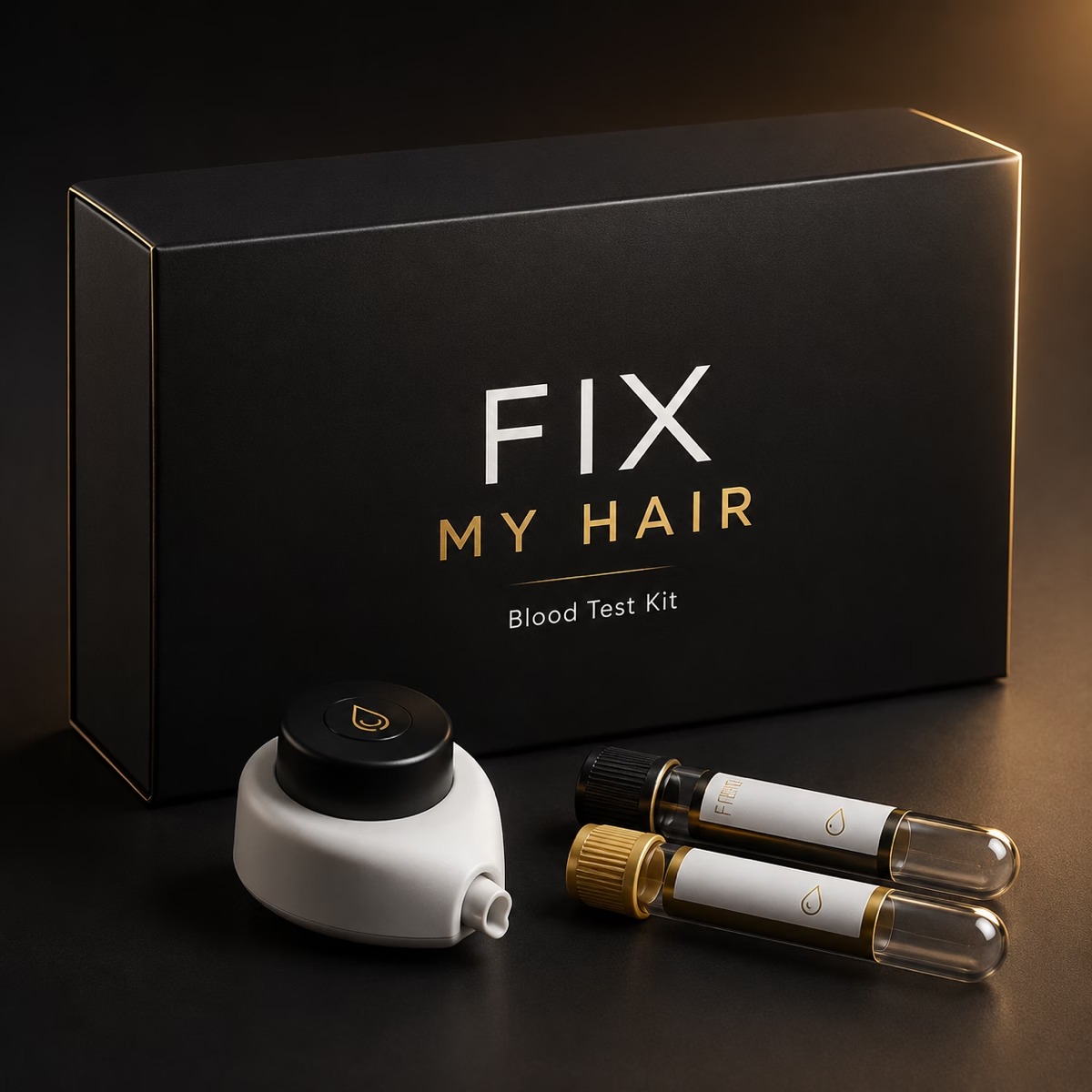
Visit any Fix My Hair clinic. Our team performs a full venous blood draw — the most accurate collection method available.
✓Full venous blood draw by our team
✓Lab analysis of all 7 markers
✓Plain-language specialist report by email
✓Brief results consultation with a specialist
Included
With a transplant
Every Fix My Hair hair transplant patient receives a full blood panel as part of their procedure price. We test before we treat — always.
The 7 markers
What we test — and why each matters.
Below 70 μg/L impairs hair growth even when haemoglobin is normal. GPs routinely miss this because they use a lower reference range designed to flag anaemia — not to optimise hair health.
Higher levels indicate more aggressive androgenetic alopecia. This directly informs how aggressively to approach medical treatment — and whether a DHT blocker is appropriate.
Thyroid dysfunction causes diffuse loss frequently mistaken for pattern baldness. Treating the thyroid often resolves the hair loss without any further intervention.
Provides essential context for DHT levels. Elevated testosterone raises the risk of DHT-driven follicle miniaturisation.
Deficiency directly affects the anagen (growth) phase of the hair cycle. It's a common deficiency in the UK — and highly treatable once identified.
Your overall health baseline. Flags anaemia and other systemic factors that can contribute to shedding.
Essential before prescribing finasteride or minoxidil. Ensures safe prescribing and protects your long-term health.
Results are interpreted by a Fix My Hair specialist — not an algorithm. You receive a plain-language report explaining what your numbers mean for your hair specifically.
The at-home kit
From kit to report in 5 steps.
Step 1
Order your kit
Arrives within 2 working days, in plain discreet packaging.
Step 2
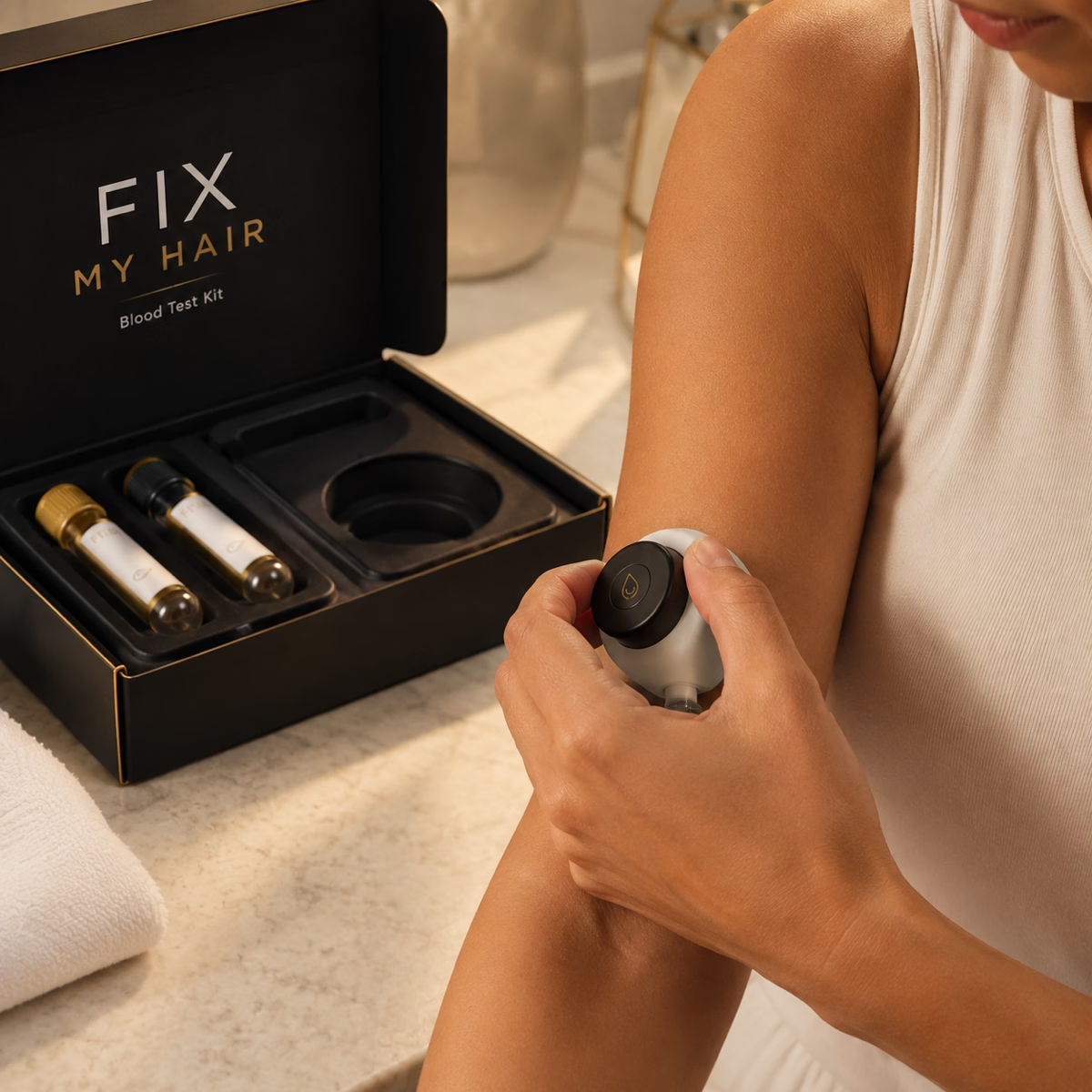
Follow the simple instructions
A quick finger prick — takes about 10 minutes at home.
Step 3
Return your sample
Seal it in the prepaid envelope provided and post it back.
Step 4
Analysed by our lab partner
All 7 markers measured in an accredited laboratory.
Step 5
Your specialist report
A plain-language report by email within 3–5 working days.
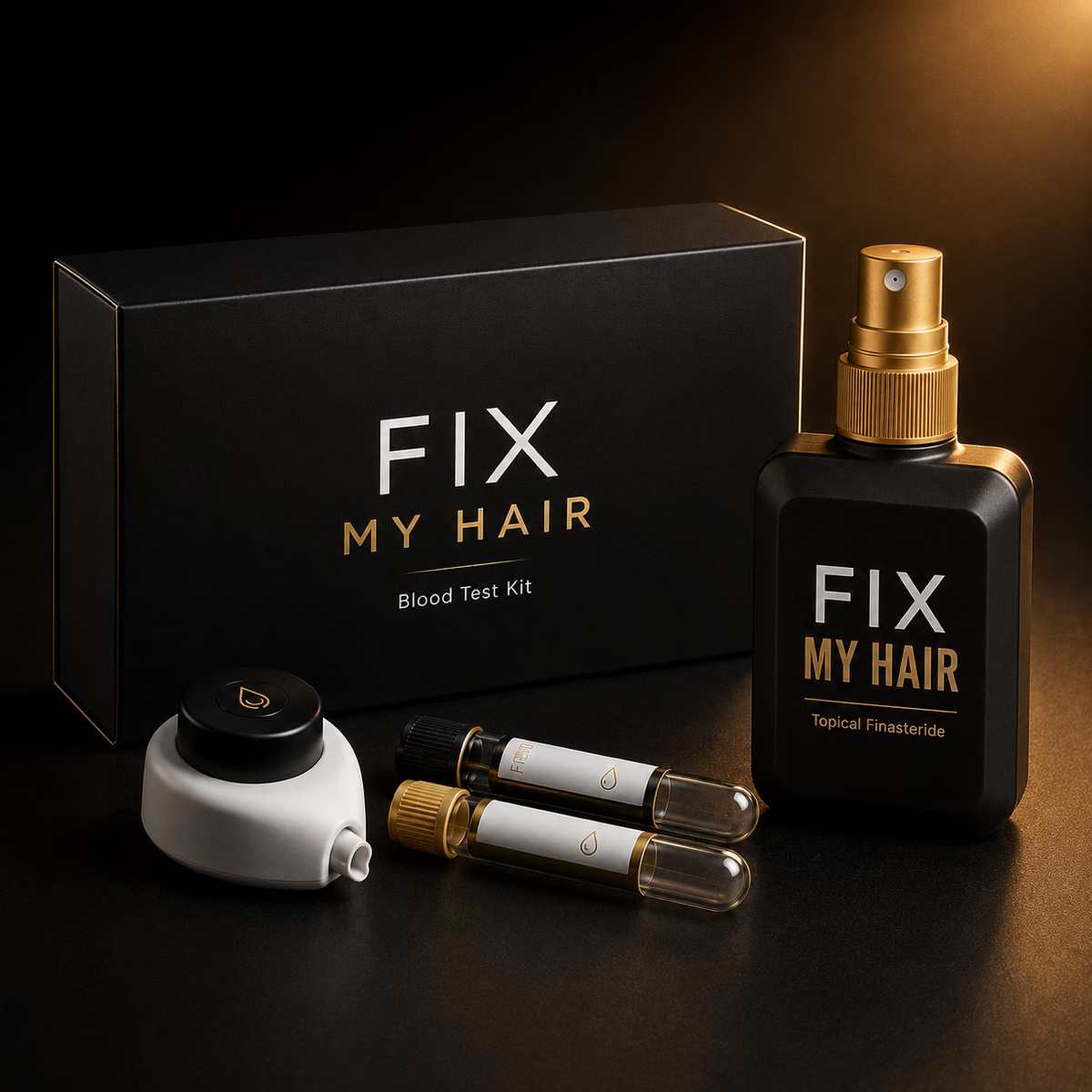
Prescription · topical
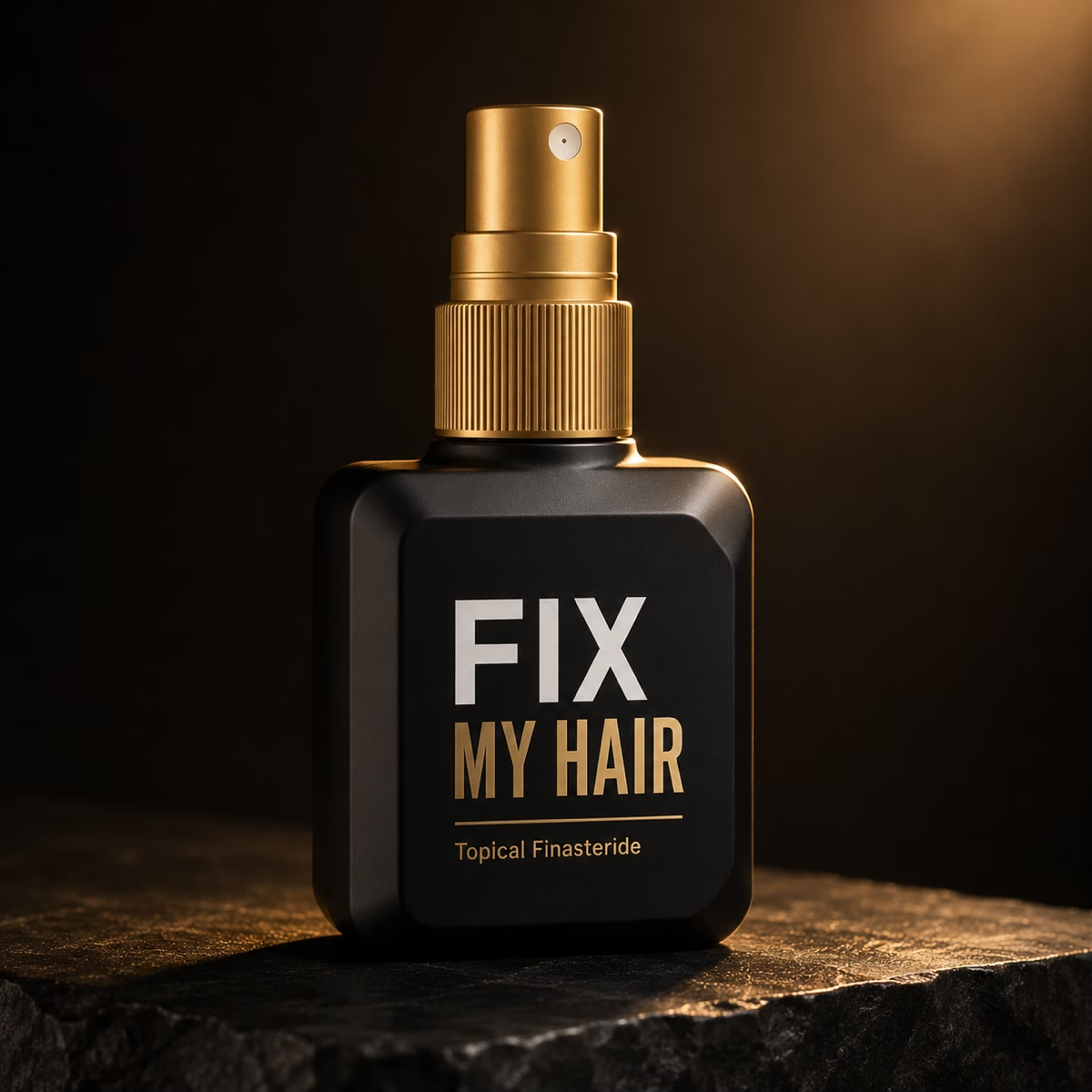
Topical finasteride. Minimal side effects.
Applied directly to the scalp — where it's needed. Not swallowed. Not systemic. Not the version most people fear.
Pricing confirmed at consultation · prescription required
Topical application means the active works at the follicle with minimal systemic absorption. Studies show topical finasteride achieves similar DHT reduction at the scalp with significantly lower blood concentration than the oral tablet — so most patients experience none of the side effects associated with the oral version.
Reduces DHT at the scalp, where it damages follicles
Same active ingredient as oral finasteride — prescription strength
Minimal systemic absorption versus the oral tablet
Suitable for long-term use
Available via Fix My Hair's pharmacy partner
Inhibits 5-alpha reductase — the enzyme converting testosterone to DHT
Topical application concentrates the drug at the scalp
Reducing DHT at the follicle halts miniaturisation
Results visible from 3–6 months of consistent use
Apply to affected scalp areas once daily
Spread evenly with fingertips — do not rinse off
Wash hands immediately after application
Use consistently — stopping reverses the benefit
Prescription required — a Fix My Hair clinician reviews your case
Not suitable for women who are pregnant or may become pregnant
Tell our team if you take other medications
Delivered via Fix My Hair's registered pharmacy partner
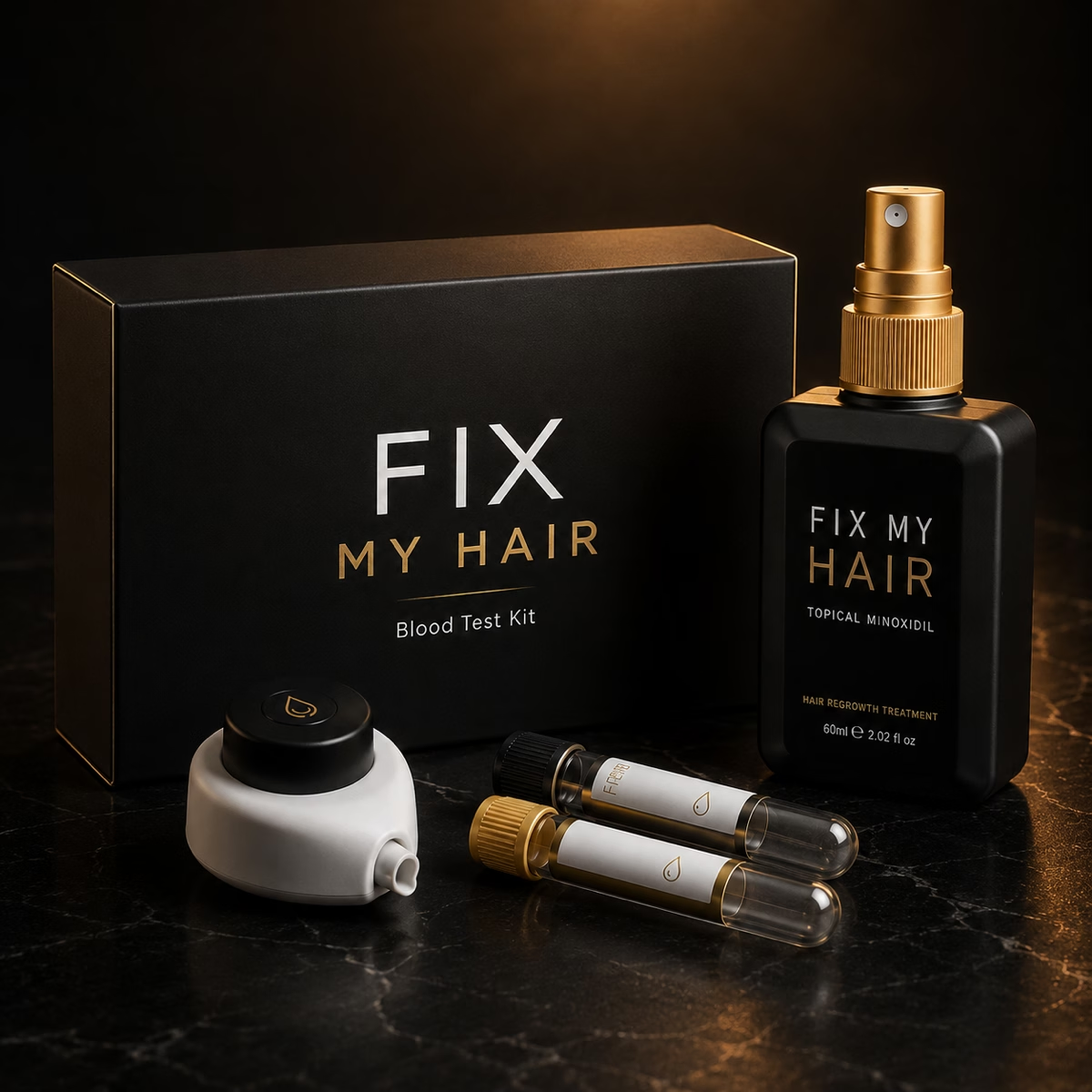
Prescription · topical
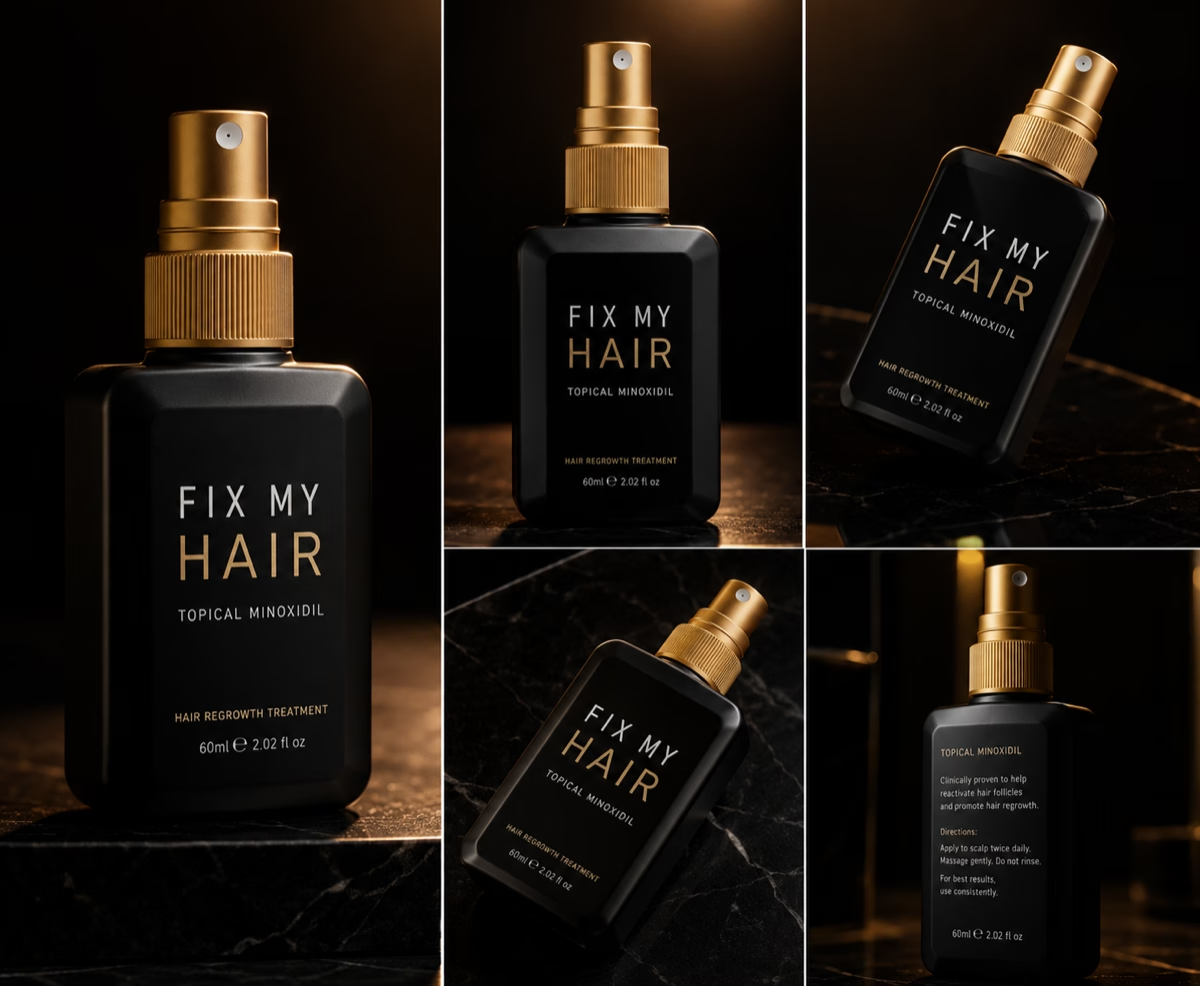
Topical minoxidil. Stimulate growth.
A follicle stimulator applied directly to the scalp for targeted effect — extending the growth phase of the hair cycle.
Pricing confirmed at consultation · multiple concentrations
Stimulates follicle activity and extends the anagen growth phase
Topical application — minimal systemic absorption
Available in multiple concentrations
Enhanced results when combined with topical finasteride
Suitable for men and women
Widens blood vessels, increasing blood flow to the follicles
Extends the anagen (growth) phase of the hair cycle
Reverses miniaturisation of affected follicles over time
Results visible from 3–6 months of consistent use
Apply the prescribed amount to a dry scalp in affected areas
Spread with fingertips — do not rinse
Allow to dry fully before styling
Apply once or twice daily as prescribed
Available via Fix My Hair's pharmacy partner
Concentration and frequency individually prescribed
Initial shedding in weeks 2–4 is expected and temporary
Consistent use required — stopping reverses the benefit
Combination therapy
Finasteride + minoxidil.
The combination consistently outperforms either alone.
Topical Finasteride
Blocks DHT — the cause
+
Topical Minoxidil
Stimulates growth — the response
Together they address both the cause and the effect — making this the most comprehensive non-surgical approach available. Clinical studies consistently show combination therapy outperforms either medication used alone.
Both medications require a clinician review before prescribing. A blood test is strongly recommended before starting — to check liver function, hormonal baseline, and identify any deficiencies.
Diagnostic bundles
Start with the full picture.
Test first. Then treat with precision.
Most popular starter
Blood Test + Topical Minoxidil
Identify your baseline. Start stimulating growth immediately.
At-home blood test kit + Topical Minoxidil (1 month)
Pricing confirmed at consultation
Clinician recommended
Blood Test + Topical Finasteride
Identify your DHT levels. Start blocking it the same day.
At-home blood test kit + Topical Finasteride (1 month)
Pricing confirmed at consultation
Bundle pricing confirmed at your free medical consultation. All medications require clinician review before prescription. Both bundles include the specialist blood test report by email.
Pharmacy partnership
Prescriptions handled by our pharmacy partner.
Fix My Hair has a registered UK pharmacy partnership for all medication supply. Our clinician reviews your case — the pharmacy fulfils your prescription and delivers discreetly to your door.
UK registered pharmacy · a regulated supply chain you can trust.
Clinician-reviewed · every prescription assessed individually, never automated.
Delivered to your door · discreet packaging, fast turnaround.
Suitability
Is medical treatment right for you?
Works well for
✓Early to mid-stage androgenetic alopecia
✓Anyone wanting to slow or halt progression
✓Post-transplant patients protecting native hair
✓DHT sensitivity identified via blood test
✓Nutritional deficiency contributing to loss
Needs assessment first
!Women who are pregnant or breastfeeding
!Anyone with liver conditions (finasteride)
!Anyone on certain other medications
!Very advanced loss (surgery may suit better)
Not every patient needs medication. Our clinician assesses each case individually and recommends only what's clinically appropriate for you. We never prescribe unnecessarily.
Good to know
Questions, answered.
Both use the same active ingredient and block DHT. The difference is delivery: oral is swallowed and circulates through the bloodstream, while topical is applied to the scalp and works locally with far lower systemic absorption — which is why most side effect concerns relate to the oral version.
The side effects feared with finasteride are linked to systemic exposure. Because topical application keeps blood concentration significantly lower, most patients experience none of them. Any medication carries some risk, which is why a clinician reviews your case individually.
Hair grows slowly. Most people see reduced shedding within the first couple of months and visible density changes from 3–6 months of consistent use. Stopping reverses the benefit, so it's a long-term commitment.
Yes — and they're often prescribed together. Finasteride blocks the cause (DHT) and minoxidil stimulates growth, so the combination consistently outperforms either alone. Your clinician will confirm what's appropriate for you.
It's strongly recommended. The panel checks liver function and your hormonal baseline, and identifies any deficiency that might be the real cause of your loss. Treating the wrong cause never works — which is why we test first.
Yes — topical minoxidil is suitable for women and is one of the most established treatments for female pattern loss. Topical finasteride, however, is not suitable for women who are pregnant or may become pregnant. Our clinician will guide the right option.
The benefit gradually reverses. Both medications maintain hair while you use them — stopping means any hair held or regained will, over the following months, return to where it would have been. That's true of all medical hair loss treatment.
Yes. The in-clinic venous blood draw, lab analysis, specialist report and a brief results consultation are free — there's no catch. It's how we'd rather you start: the most accurate test, in person, before any treatment decision.
From the Fix My Hair Journal
Read before you decide.
Clinician-reviewed guides on testing and medical treatment.
This page is for informational purposes only and does not constitute medical advice. Always consult a qualified clinician. Prescription required — clinician review mandatory; Fix My Hair's pharmacy partner fulfils all prescriptions. Topical finasteride is not suitable for women who are pregnant or may become pregnant.
Free in-clinic blood test — test before you treat
We use cookies to understand how you use our site and improve your experience. Read our Cookie Policy
Cookie Preferences
Strictly necessaryAlways on
Essential for the website to work. Cannot be disabled.
Helps us understand how visitors use our site (GA4 + Microsoft Clarity).
Used for personalised advertising. We don't currently use these.