Low Ferritin and Hair Loss
 Written by the Fix My Hair Editorial Team · Clinician-reviewed by Dr Hisham Band · GMC No. 7550130 · Last reviewed 22 Mar 2026
If nobody specifically checked your ferritin, there’s a good chance the most important number was never measured.
Ferritin vs haemoglobin
Ferritin is your stored iron. You can have perfectly normal haemoglobin and still have ferritin too low for healthy hair growth — which is why it slips through standard testing.
The optimal range
Below roughly 70 μg/L can impair growth, yet many GP ranges flag “low” only far beneath that. Women are particularly vulnerable.
Fixing it
Replenishing iron stores takes 3–6 months. Our panel interprets ferritin at the optimal range for hair, not just the standard one.
What ferritin actually is
Ferritin is the protein that stores iron in your body — effectively your iron savings account. It’s different from haemoglobin, the iron actively circulating in your blood. You can have normal haemoglobin (so you’re not anaemic) while your ferritin — your reserves — runs low. And hair is one of the first things the body sacrifices when iron stores dip.
Why low iron causes hair loss
Hair follicles are among the most metabolically active tissues in the body, and they need iron to fuel rapid cell division. When stores fall, the body prioritises essential organs over hair, pushing follicles prematurely into the resting phase — a diffuse shed known as telogen effluvium. This is why low ferritin is one of the most common causes of unexplained shedding, particularly in women, vegetarians and anyone with heavy periods.
Ferritin versus haemoglobin
This is the crux of why it’s missed. A standard test often checks haemoglobin and calls you “not anaemic” without ever measuring ferritin. Your reserves can be nearly empty while your circulating iron looks fine, so the test reassures you while your hair keeps thinning. If ferritin wasn’t specifically measured, low iron hasn’t been ruled out.
The optimal range for hair
Lab ranges flag deficiency only at quite low levels, but hair often needs more. Many clinicians consider a ferritin comfortably above the bottom of the range — frequently cited around 50–70 ng/mL or higher — as the target for healthy growth, rather than the “just not anaemic” threshold. Sitting at the low end of normal can be enough to drive a shed.
How to fix it
Correcting low ferritin is one of the more satisfying fixes in hair medicine, because it’s genuinely reversible:
- Diet — red meat and liver, or for plant sources lentils, beans, spinach and fortified foods; pairing plant iron with vitamin C improves absorption.
- Supplements — iron under guidance, since too much iron is harmful and the right dose and form matter.
- Address the cause — heavy periods, gut absorption issues or diet; topping up iron while ignoring why it’s low only works temporarily.
Recovery isn’t instant — stores take months to rebuild and hair months more to regrow — but it does come.
Should you just take iron?
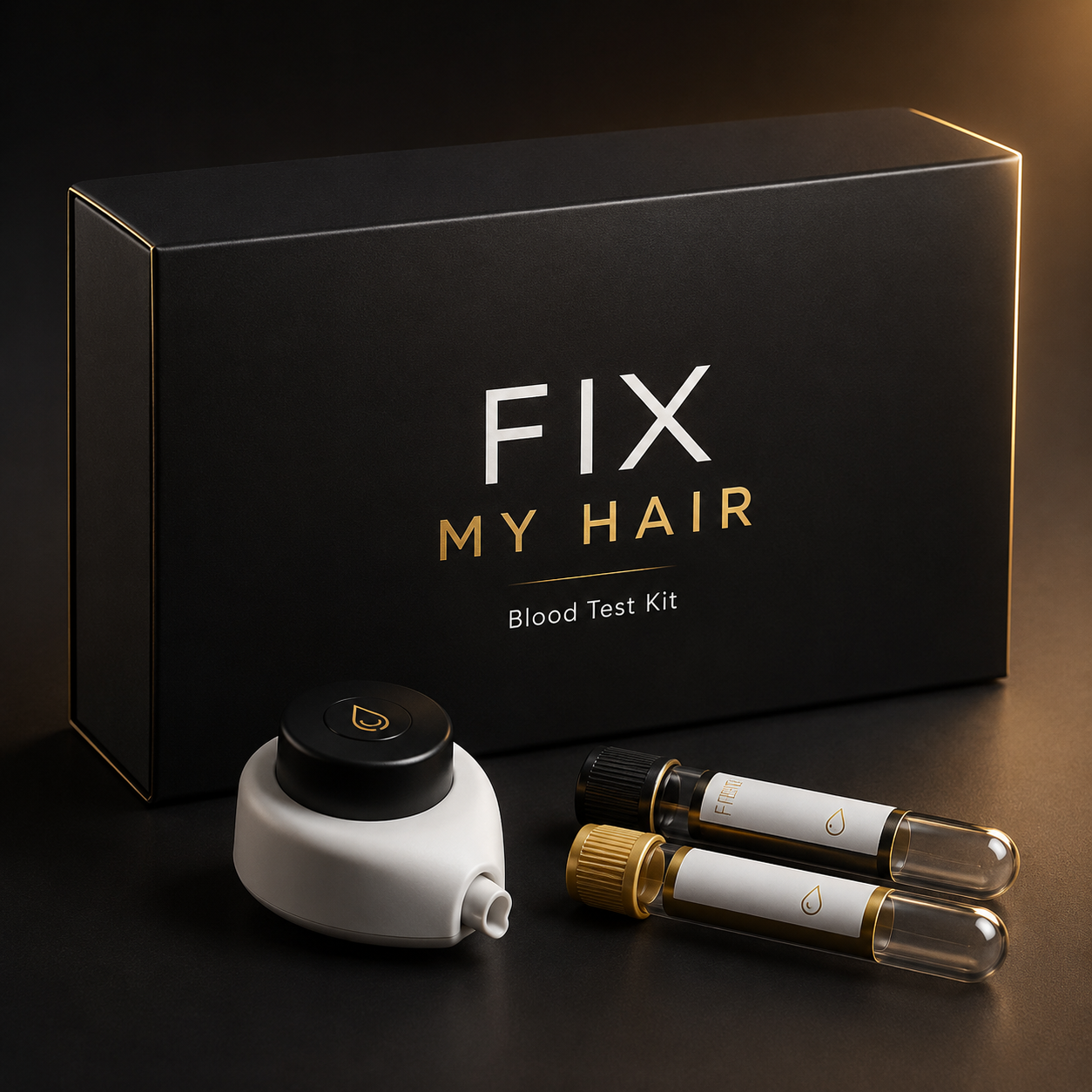
No — not without testing. Supplementing iron you don’t need can cause harm, and iron overload is a real condition. The right move is to measure ferritin first, then correct it if it’s genuinely low — exactly what our blood panel is designed to catch.
Common questions
Can low iron alone cause hair loss? Yes — low ferritin is a well-recognised cause of diffuse shedding, and correcting it can resolve it.
How long until my hair recovers? A few months to rebuild stores and several more for visible regrowth — reversible, but not overnight.
Is it more common in women? Much more — menstruation and pregnancy make low iron far more frequent in women.
Key takeaways
- Below 70 μg/L impairs growth even with normal haemoglobin
- GPs use a lower reference range
- Women are particularly vulnerable
- Replenishment takes 3–6 months
- Our panel interprets at the optimal range