What If I Need a Second Hair Transplant?
 Written by the Fix My Hair Editorial Team · Clinician-reviewed by Dr Hisham Band · GMC No. 7550130 · Last reviewed 25 Apr 2026
A second session isn’t a failure of the first, it’s often a planned part of a sensible long-term strategy.
Planned versus unplanned second procedures
There are two very different reasons people have a second transplant. The planned kind is part of a strategy from the start, a large area restored in two staged sessions to respect the scalp and protect graft survival. The unplanned kind happens when native hair behind or around the grafts keeps thinning over the years, opening a new gap. The first is good planning; the second is usually preventable.
How donor supply is protected across two surgeries
Your donor area is finite, so a surgeon thinking long-term never spends it all in one go. A well-planned first procedure harvests conservatively and designs a hairline that will still suit you in decades, deliberately keeping reserves so a second session, if ever needed, remains possible. Over-harvesting in session one is one of the most common reasons repair patients reach us with no good options left.
Why you wait 12 to 18 months between sessions
Transplanted hair sheds, then regrows over 9 to 12 months, reaching full maturity around the one-year mark. Waiting at least 12 to 18 months lets the first result fully express itself, so the surgeon can see exactly what’s needed and place new grafts around established hair without disturbing it. Rushing a second session risks damaging the first.
What a second session involves
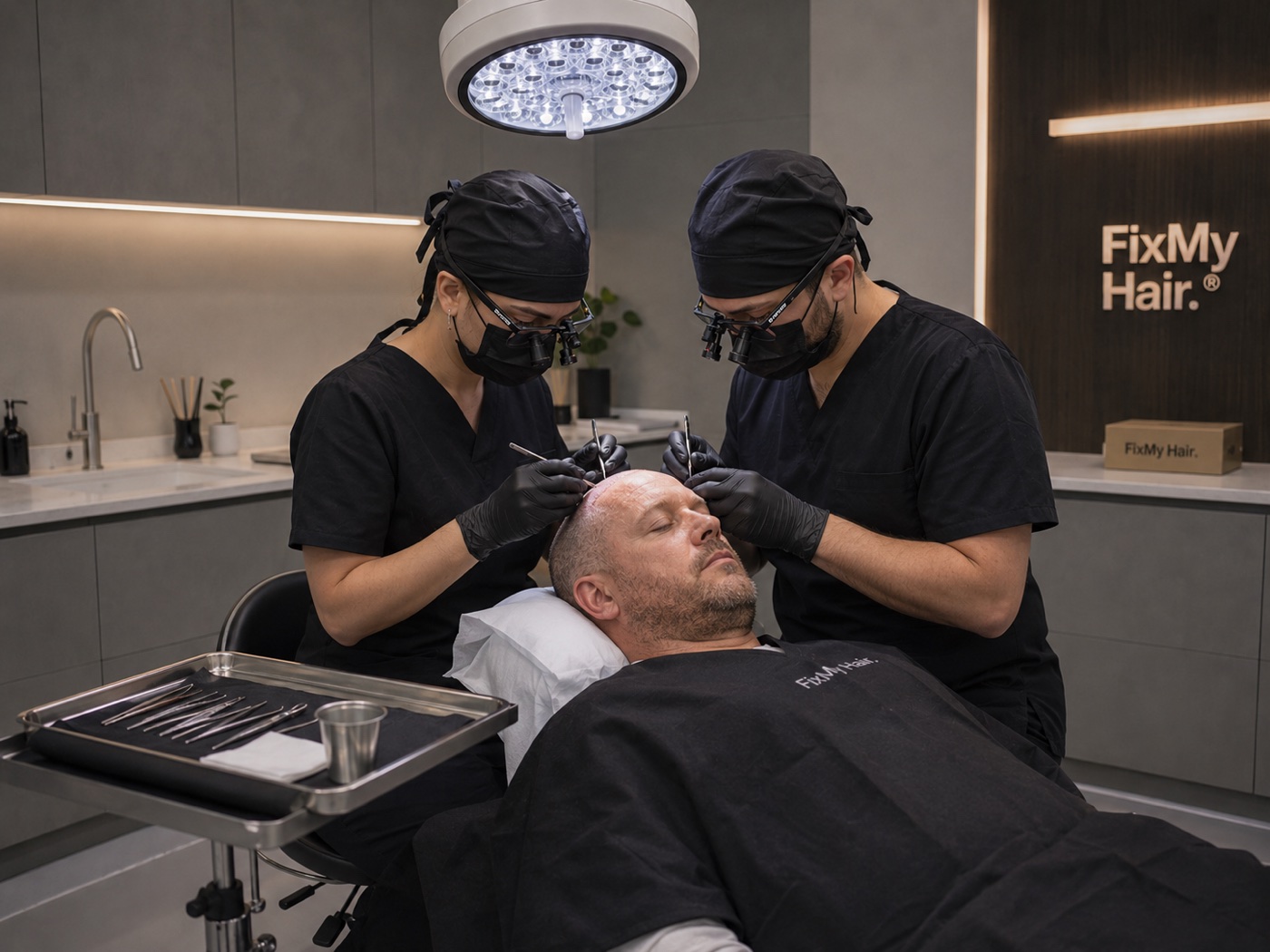
Practically, it’s very similar to the first: the same FUE process, the same recovery, working around your now-mature grafts. Because the surgeon is adding to an existing result rather than building from scratch, second sessions are often smaller and more targeted, topping up density or addressing a newly thinned zone.
How to make a second unlikely
The biggest lever is protecting the hair you weren’t transplanting. Transplanted follicles are largely resistant to DHT, but your native hair isn’t, and if it keeps thinning, new gaps appear. Ongoing finasteride and/or minoxidil stabilise that native hair, which is why we build a medical plan around every surgical one.
A second session isn’t the same as a repair
It’s worth separating two ideas. A second session adds to a good result. A repair corrects a poor one, an unnatural hairline, visible scarring or wasted donor from work done elsewhere. Repairs are more complex and donor-limited, which is exactly why getting the first procedure right, with an accountable surgeon, matters so much.
Common questions
Will a second transplant cost the same? It depends on the grafts needed, a small top-up costs less than a full session. You’ll get a clear figure at review.
Does needing a second mean the first failed? No. Most second sessions reflect ongoing natural loss or a deliberately staged plan, not a failed procedure.
Protecting your result for the long term
The best way to avoid an unplanned second procedure is to look after the result of the first, and that’s mostly about the hair you didn’t transplant. Transplanted follicles are largely permanent, but your surrounding native hair can keep thinning with age, and that’s what opens new gaps. A consistent medical routine is the single most effective insurance.
That usually means ongoing DHT management, sensible scalp care, and periodic reviews so any change is caught early rather than discovered as a visible gap. We build this long-term plan into every surgical one, because a transplant that looks excellent at year one but isn’t protected can drift over the following decade. Thinking in decades rather than months is exactly what separates a result you’re happy with now from one you’re still happy with at sixty.
If Greater Manchester is closer to home, our hair transplant Rochdale page is the practical starting point for a repair assessment.
If your first procedure happened abroad and needs putting right rather than topping up, our Turkey hair transplant repair UK guide walks through the assessment.
Wondering how results hold up much further out? Our guide to what happens 10 years after a hair transplant covers the long view honestly.
Key takeaways
- Second sessions address new loss or density
- Donor supply is managed across both
- Minimum 12 to 18 months between
- DHT management reduces likelihood
- The first procedure should plan long-term