Sapphire FUE · FUT · DHI
FUE Hair Transplant
You get told what is actually right for you, including when the answer is no.
GMC Registered·
Sapphire FUE·
Dr Band: 1,500+ procedures·
From £3,500
You get told what is actually right for you, including when the answer is no.
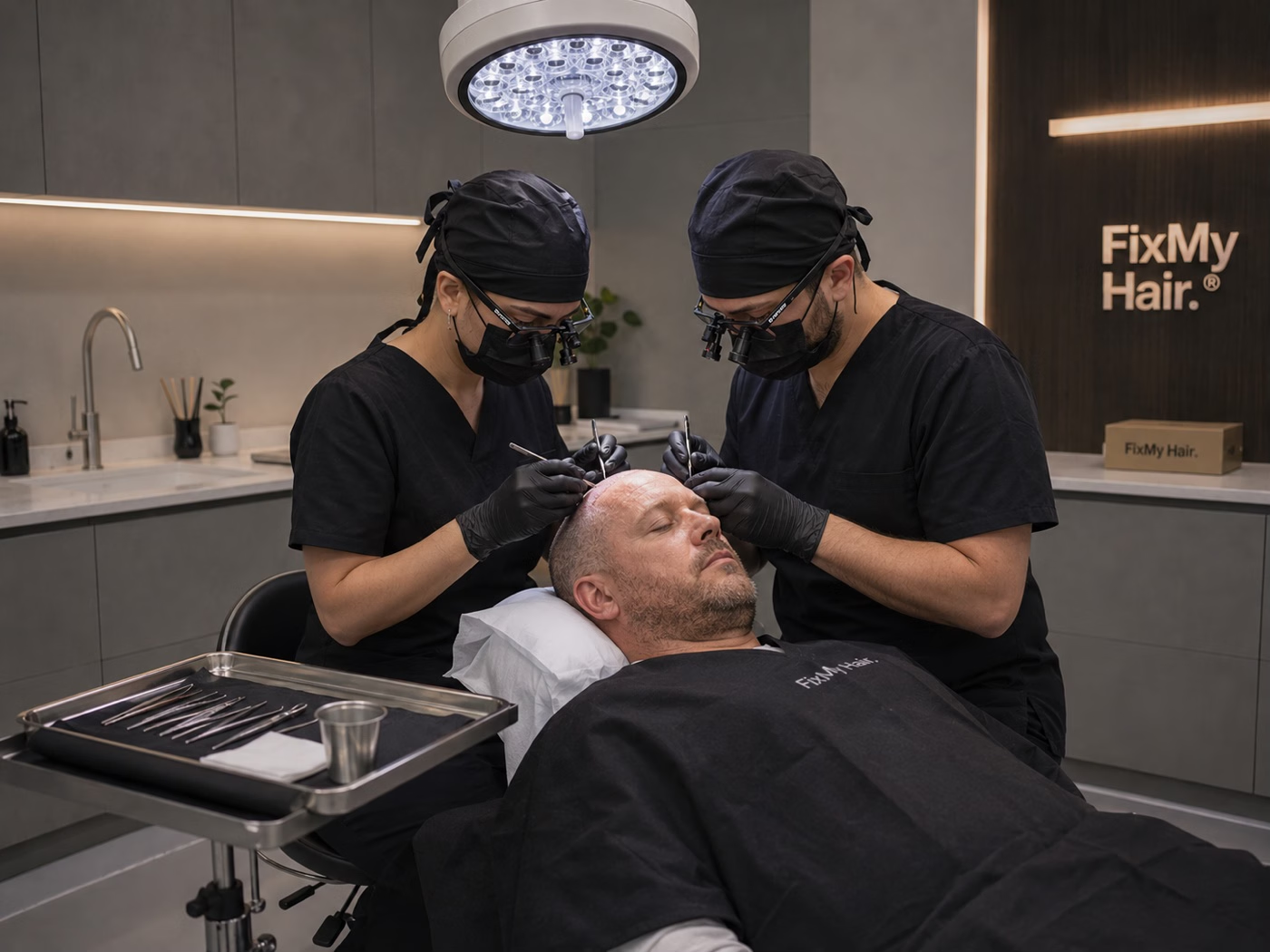
FUE (follicular unit extraction) is a hair transplant technique that moves individual hair follicles from the back and sides of your scalp, where hair resists balding, into areas that have thinned. Each follicle is removed one at a time with a tiny punch, so there is no linear scar, and placed at the natural angle and direction of your existing hair. Sapphire FUE uses sapphire blades to make the small channels the grafts sit in, allowing finer, more precise incisions. The procedure takes one day under local anaesthetic. The transplanted hairs shed within a few weeks, start regrowing from three to four months and reach their final look at around twelve months. At Fix My Hair, FUE is a fixed £3,500 for up to 2,300 grafts, £4,500 for 2,301 to 3,000 grafts or £5,500 for 3,001 to 3,500 grafts (bespoke above that), agreed in writing before booking, with a blood panel and twelve months of structured support included.
Because hair loss has a cause, and the cause changes the plan.
The most common hidden cause of shedding, especially if you feel tired too. One number tells us. If it is low, the fix is simple and hair usually recovers.
DHT slowly shrinks hairs until they stop growing back. Your level shows how aggressive your loss is, and which medication will actually hold it.
A thyroid running too fast or too slow causes shedding that looks exactly like balding. Treat the thyroid, and that hair often comes back without surgery.
Read together with DHT, this shows how hard your hormones are pushing the hair loss, so your treatment is matched to you, not to an average man.
Half the UK runs low, and low vitamin D keeps follicles asleep. A cheap daily dose can wake them, but only once it has actually been measured.
Rules out anaemia and other hidden causes before anyone blames your genes. If your shedding has a fixable cause, this is where it shows up.
The prescribing clinician reviews relevant health markers before issuing any prescription. If a medication is not safe for you, you will never be given it. Your health outranks any sale.
Your treatment plan is built around your biology, not a textbook average.
Tap any zone to understand what happens there.
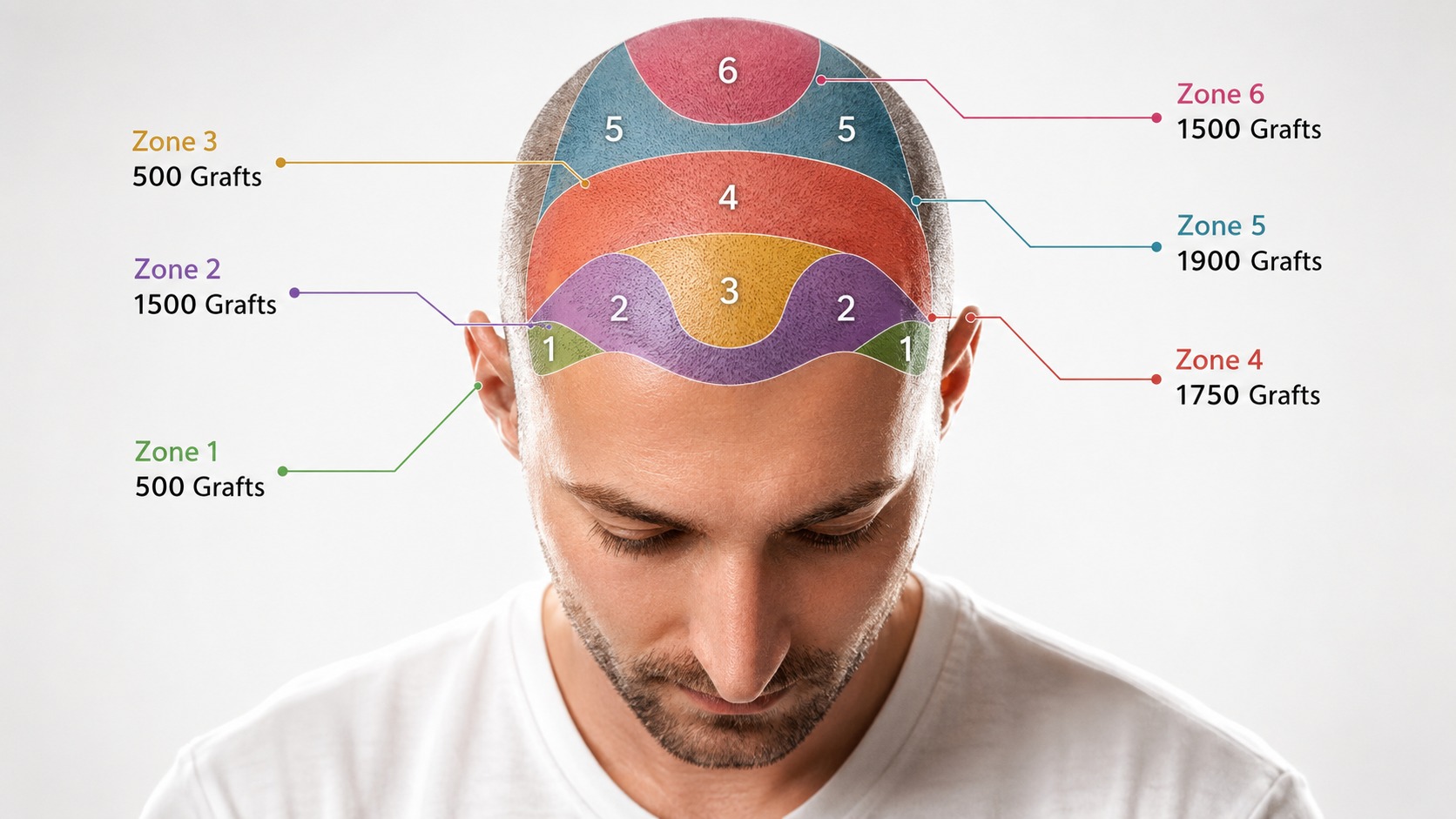
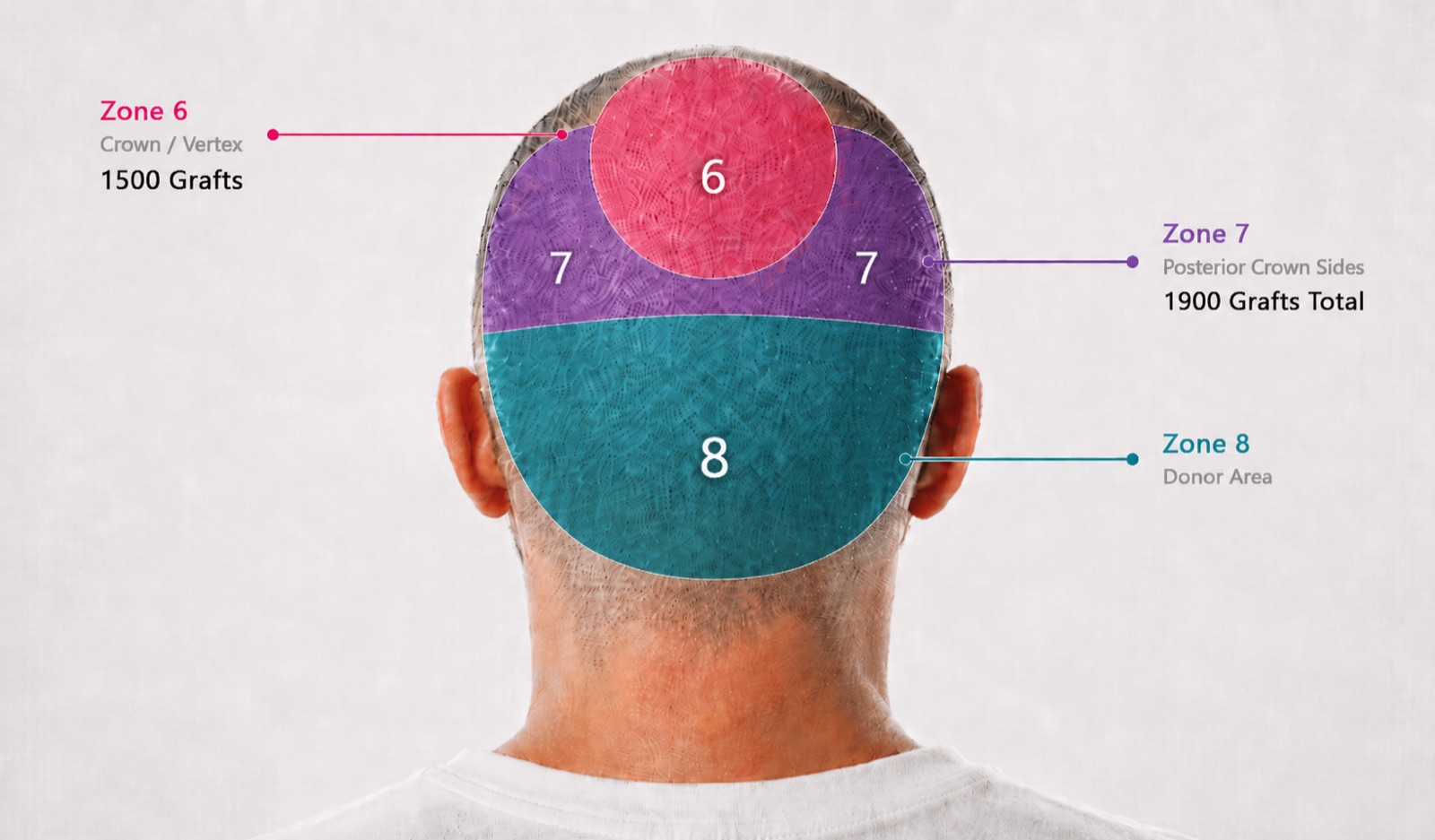
All 8 zones · approx. 9,650 grafts total · 2 sessions typically recommended
Individual zones £3,500, £4,500 or £5,500 fixed · confirmed in writing at consultation
Individual follicular units, natural groupings of 1 to 4 hairs, are extracted one by one from your donor zone with a 0.8mm precision micro-punch. No strip, no stitches, no linear scar.
The angle, depth and direction of every incision determines whether your result looks natural. This is where the artistry lives, and why the surgeon, not a technician, does it.
Sapphire blades cut a smoother, narrower channel than steel, less tissue trauma, faster healing, and grafts packed closer together for denser, more natural results. Each graft is then placed into its channel by hand.
| Attribute | Sapphire FUEWhat we do | FUT | DHI |
|---|---|---|---|
| Best for | Most patients | Larger sessions | Dense, defined hairlines |
| Scarring | No linear scar, tiny dots | One fine linear scar, easily hidden | Tiny dots (FUE-style extraction) |
| Healing | Faster healing, minimal downtime | Ask at consultation | Similar to FUE |
| Shaving | Shaved or unshaven options | No need to shave the donor area | Often unshaven-friendly |
| Session | 4 to 8 hours, grafts dependent | 4 to 6 hours | Discussed at consultation |
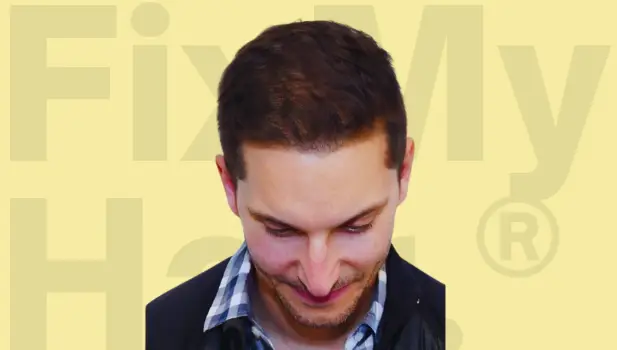

Drag any photo to reveal 12 months. Results may vary; shown with patient consent.
These case studies demonstrate historical procedures performed through the Fix My Hair network. Individual results vary and depend on your chosen surgeon.
Curious what it all costs? See how much a hair transplant costs in the UK, including our three fixed prices.
“Not everyone needs surgery. My job is to tell you what is actually right for you, not what generates the highest invoice.”
Dr Hisham Band · GMC-Registered DoctorEvery price includes your blood panel, Sapphire FUE surgery, a full course of post-op growth treatments, 12 months of structured support, a long-term result review, hotel and taxi on the day, and a doctor-led consultation. Nothing hidden.
Payment options are explained and confirmed in writing before you book.
"Not everyone needs surgery. My job is to tell you what's actually right for you, not what generates the highest invoice."
Anywhere, not just here. An informed patient makes better decisions, and better decisions make better hairlines.
Clear, clinician-reviewed guides from the Fix My Hair journal.


Fix My Hair coordinates your care and remains your point of contact. Your treatment is carried out by the surgeon and registered healthcare provider named above, who are responsible for your clinical care. These details are confirmed to you in writing before you book.