Does a Hair Transplant Hurt?
 Drafted by the Fix My Hair editorial team · Clinically reviewed by Dr Hisham Band · GMC No. 7550130 · Last reviewed 20 Oct 2026
Most people feel the local anaesthetic injections at the start and very little after that. For a few days afterwards the scalp is usually tight, achy and swollen, and ordinary painkillers are usually enough to manage it.
New to the procedure? Start with the guide to FUE hair transplant.
On the day, stage by stage
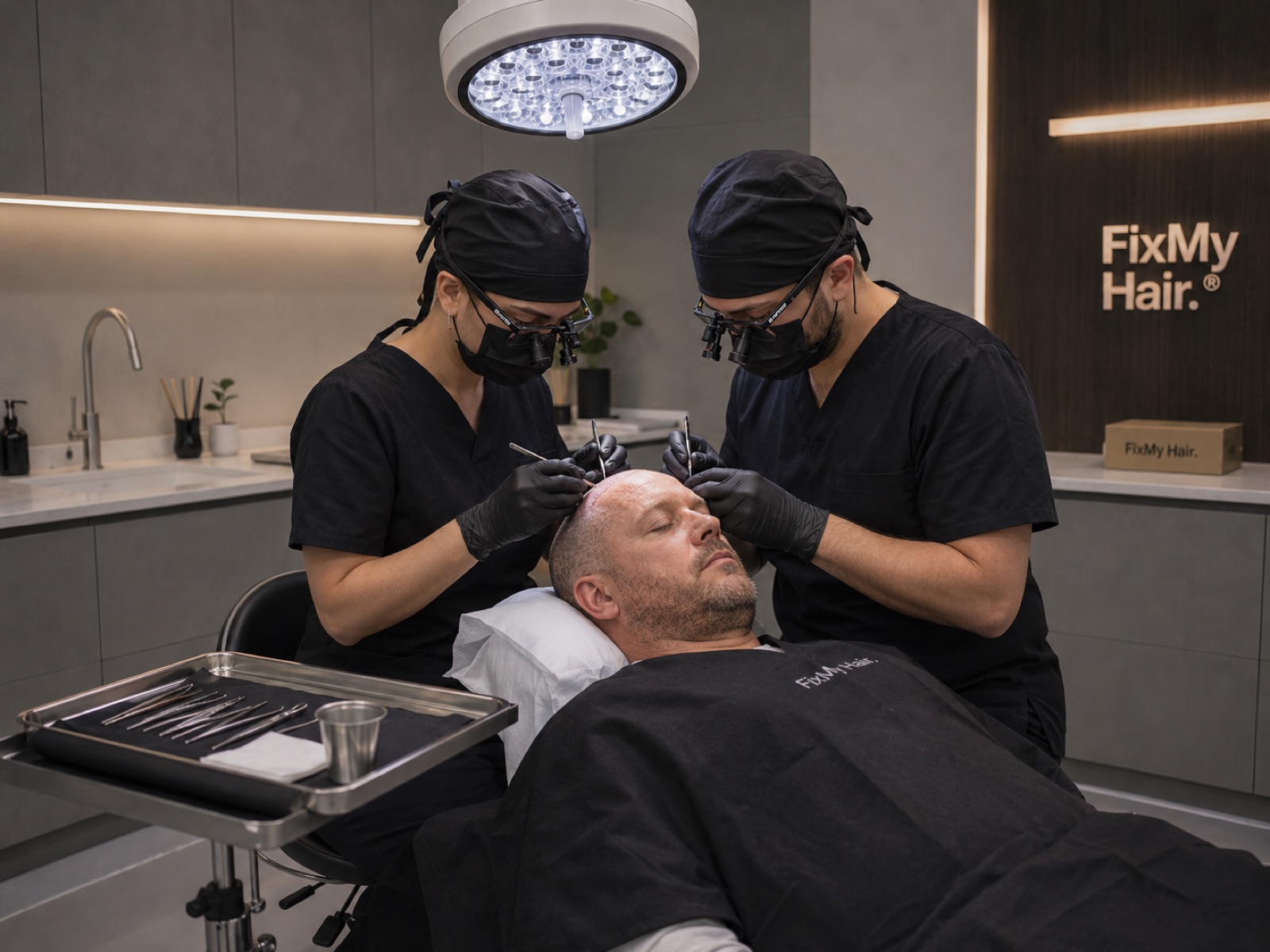
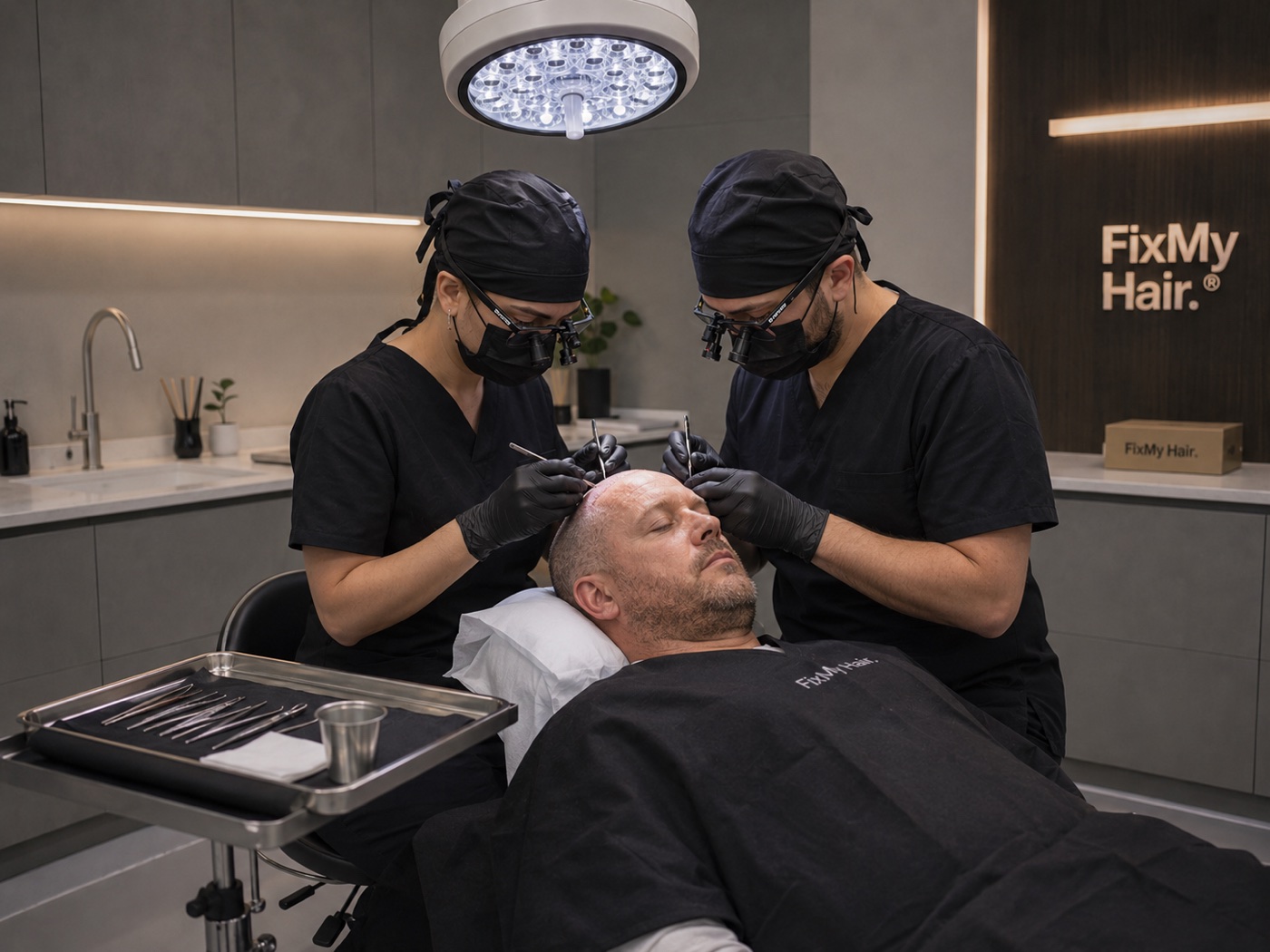
The anaesthetic. The scalp is numbed with local anaesthetic, given as a few small injections. This is the part most people notice: a sharp scratch and a sting for a few seconds each, and then the area goes numb. The NHS describes a hair transplant as usually done under local anaesthetic and sedation, which means you are awake but should not feel pain. Some clinics offer sedation to help you relax, so ask before the day whether it is offered and what it involves.
Taking the grafts. Once the donor area at the back of the head is numb, you feel pressure and movement rather than pain. You are usually lying face down for this part, which is more tiring than sore.
Placing the grafts. The recipient area is numbed in the same way before any graft goes in. The day is long, so breaks for food and the toilet are normal. If you start to feel anything sharp, say so straight away: the area can be numbed again.
The first night and the first week
When the anaesthetic wears off that evening, the scalp usually feels tight and tender. The NHS lists a tight, achy and swollen scalp for a few days, and temporary scabbing where the hair was placed, as common after effects. Most people describe it as a dull ache rather than sharp pain, and it eases day by day.
Sleeping is the awkward part, because you need to keep pressure off the new grafts. The guide to sleeping after a hair transplant covers how to set up your pillows, and days 1 to 7 after your transplant walks through the first week day by day.
Which area is sorer?
For many people the donor area at the back feels sorer in the first few days than the area where the grafts were placed, because that is where the grafts were taken from. With FUE the donor area has many tiny round marks; with FUT there is a single stitched line, which can feel tight until it settles.
Is FUE less painful than FUT?
The International Society of Hair Restoration Surgery says many patients report less pain after FUE than after FUT. Both are done under local anaesthetic, so the difference is mostly in the days after, not on the day itself. The FUE, FUT and DHI comparison explains the methods in more detail.
What helps with the soreness
Ordinary over-the-counter painkillers, taken as advised in your aftercare instructions, are usually enough. Sleeping with your head raised can help the swelling settle, and following the washing and care steps you are given protects the grafts while they anchor. If anything is prescribed for you, the prescribing clinician explains what it is for and how to take it.
When pain is not normal
Soreness should ease a little each day. Contact your clinic promptly if pain is getting worse after the first few days, if the area becomes hot, very red or swollen, if there is pus or discharge, or if you feel feverish. The guide to signs of a healthy recovery sets out what is expected, and risks and downsides covers what can go wrong.
Common questions
Will I be awake during a hair transplant? Usually, yes. It is done under local anaesthetic, so you are awake but the treated areas are numb. Some clinics also offer sedation to help you relax.
How long does the soreness last? The scalp is usually tight, achy and swollen for a few days, easing day by day. Most people find it settles within the first week.
Is FUE less painful than FUT? Many patients report less pain after FUE than after FUT, according to the International Society of Hair Restoration Surgery. Both are done under local anaesthetic.
When can I go back to work? The NHS says you may need 1 to 2 weeks off work. It depends on your job; see when can I go back to work.
Key points
- The local anaesthetic injections at the start are the part most people feel
- After that, the treated areas are numb and you feel pressure rather than pain
- A tight, achy, swollen scalp for a few days is common and usually eases with ordinary painkillers
- Many patients report less pain after FUE than after FUT
- Pain that gets worse, heat, discharge or fever are reasons to call your clinic
Medical note: This article is general information, not medical advice. Whether a hair transplant suits you is confirmed only at a consultation with a GMC-registered doctor. Experiences and results vary from person to person.
Sources: NHS, Hair transplant (accessed 20 Oct 2026); ISHRS, FUE: what is it? (accessed 20 Oct 2026).