Hair loss assessment

Understand the cause. Then decide.

Hair loss is a symptom, and more than one thing causes it. Before anything is recommended, a doctor looks at your history, your pattern and your general health, and tells you honestly what you are dealing with.

Doctor-led assessmentClinician-reviewedFree, no obligationPatients across the UK
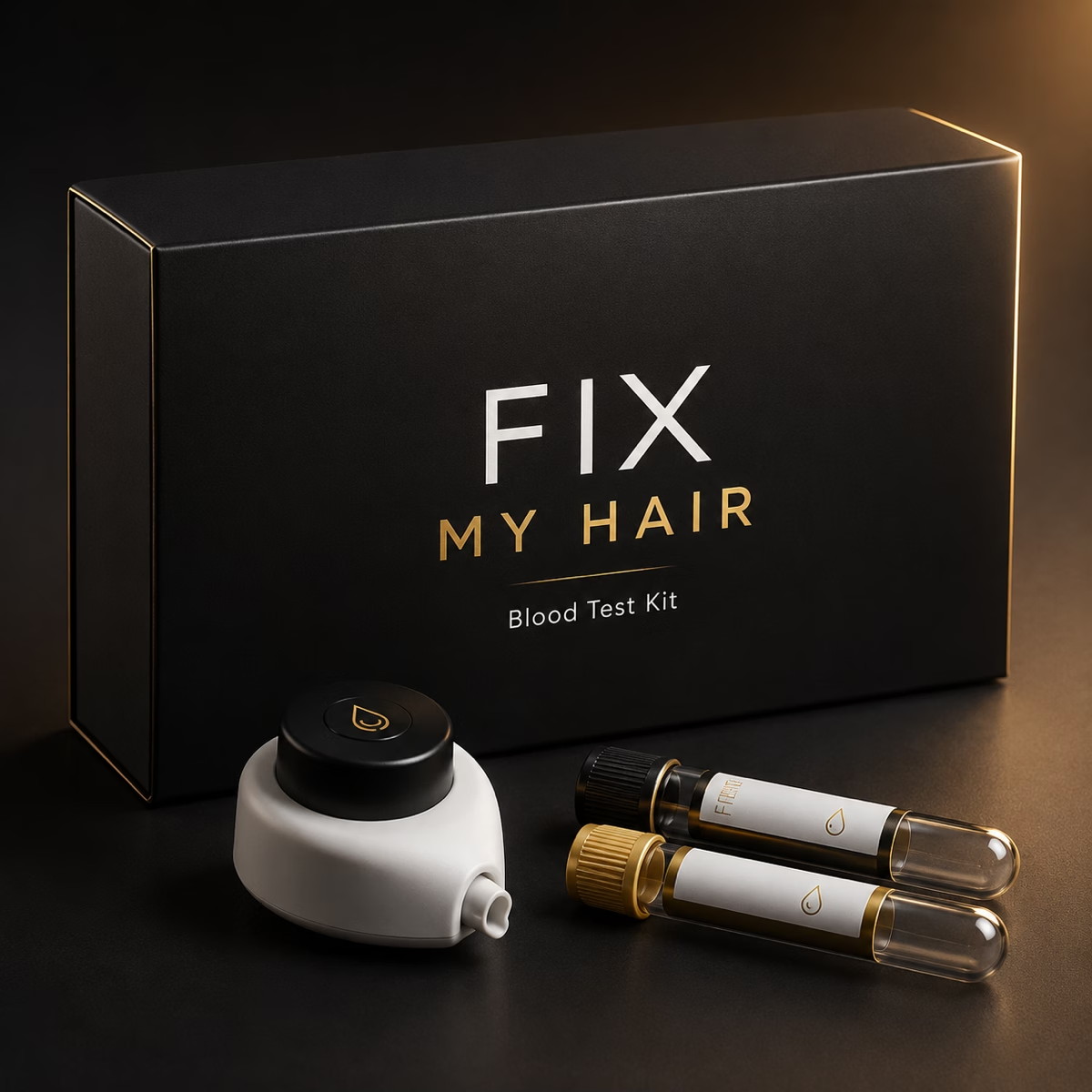
Blood sample tubes used for laboratory investigations
Why the cause matters

Hair loss has more than one cause.

Some causes respond to treating the underlying problem, some do not, and telling them apart is a clinical judgement rather than something you can read off a website.

Ferritin deficiency

Iron stores are commonly checked where a clinician suspects a nutritional contribution, particularly in women.

Assessed by your clinician
Thyroid dysfunction

Can cause diffuse shedding that resembles pattern baldness, which is one reason a clinician may want it checked.

Assessed by your clinician
DHT levels

One of the factors a clinician may consider when assessing androgenetic hair loss.

Assessed by your clinician
Read more in our education hub →
Common investigations

What a clinician may look at, and why.

Iron stores can be low while a standard full blood count still looks normal, which is why ferritin is sometimes checked separately. What a given result means for you is a matter for the clinician reviewing it.
Androgen activity is one of the factors a clinician may take into account when assessing androgenetic hair loss and what, if anything, is appropriate for you.
Thyroid problems can cause diffuse shedding that is easily mistaken for pattern baldness, which is why a clinician may want thyroid function checked before drawing conclusions.
Provides essential context for DHT levels. Elevated testosterone raises the risk of DHT-driven follicle miniaturisation.
Deficiency directly affects the anagen (growth) phase of the hair cycle. It's a common deficiency in the UK, and highly treatable once identified.
Your overall health baseline. Flags anaemia and other systemic factors that can contribute to shedding.
Liver function is one of the baseline checks a prescriber may want before considering any medicine, as part of prescribing safely.

Where investigations are carried out, the results are interpreted by the appropriate clinician, who explains what they mean for you.

Suitability

Is an assessment the right next step?

Works well for
Early to mid-stage androgenetic alopecia
Anyone wanting to slow or halt progression
Post-transplant patients protecting native hair
Anyone who wants the cause established first
Nutritional deficiency contributing to loss
Needs assessment first
!Women who are pregnant or breastfeeding
!Anyone with a liver condition
!Anyone on certain other medications
!Very advanced loss (surgery may suit better)

Not everyone needs treatment, and not everyone who wants surgery is a suitable candidate for it. The treating clinician assesses each case individually and recommends only what is clinically appropriate, including recommending nothing at all.

Good to know

Questions, answered.

It starts with your history: how long you have been losing hair, the pattern, whether it runs in your family, your general health and any medication you already take. Photographs help. Where it is appropriate, a doctor reviews that information and decides what, if anything, should be investigated further.
Hair loss is a symptom, not a single condition. Pattern hair loss, a thyroid problem, low iron stores and a reaction to stress or illness can look similar on the surface but need completely different approaches. Establishing which one you are dealing with is what makes any plan worth following.
Not everyone does. Where your history or examination suggests something worth checking, the treating clinician may recommend blood investigations and will explain what is being looked for and why. That decision is theirs to make, not ours.
Sometimes. Whether any medicine is appropriate for you, which one, and at what strength are clinical decisions for an appropriately qualified prescriber after they have assessed you. We cannot tell you that from a website, and we would be wary of anyone who tried.
No. Some people are told their loss is stable and needs nothing further for now. Some are better suited to a non-surgical option. Some are not suitable candidates for surgery at all. An honest assessment includes being told when the answer is to wait.
Fix My Hair coordinates your journey: we gather your information, arrange your appointments and stay your point of contact throughout. Medical assessment, diagnosis, suitability and any prescribing are the responsibility of the treating clinician and the registered healthcare provider identified for your care.
The first conversation is usually quick. If investigations are recommended, results and their interpretation take longer, and your clinician will tell you the realistic timescale for your situation rather than a standard one.
The initial consultation and assessment are free and carry no obligation. If anything further is recommended, the cost is explained and confirmed in writing before you agree to it.
From the Fix My Hair Journal

Read before you decide.

Clinician-reviewed guides on testing and medical treatment.

The Blood Test Your GP Never Ordered
Blood Tests
The Blood Test Your GP Never Ordered
6 min read
Why am I losing my hair?
Medications
Why Am I Losing My Hair?
5 min read
Low ferritin and hair loss
Causes
Low Ferritin and Hair Loss
5 min read
Explore all articles →
Test first

Start with the blood test. Then we'll know exactly what you need.

Chat on WhatsApp

This page is for informational purposes only and does not constitute medical advice. Always consult a qualified clinician. Fix My Hair coordinates your assessment and remains your point of contact. Medical assessment, diagnosis, treatment suitability and any prescribing are decided by the treating clinician and the registered healthcare provider identified for your care.