Hair Transplant Risks, Downsides and Honest Success Rates
 Written by the Fix My Hair Editorial Team · Clinician-reviewed by Dr Hisham Band · GMC No. 7550130 · Last reviewed 18 Aug 2026
Every clinic will happily tell you what can go right. Here is the other half of the conversation: the real risks, the honest downsides, and why we will not quote you a magic success percentage.
Considering surgery? Start with our guide to FUE hair transplant.
The short answer
Done properly, an FUE hair transplant is a low-risk procedure performed under local anaesthetic, and most complications are minor and temporary. But low risk is not no risk, and the risks that matter most are not the ones on the consent form. They are the decisions made before anyone picks up an instrument: whether you should be having surgery at all, who designs it, and how carefully your donor hair is spent.
The risks nobody should hide from you
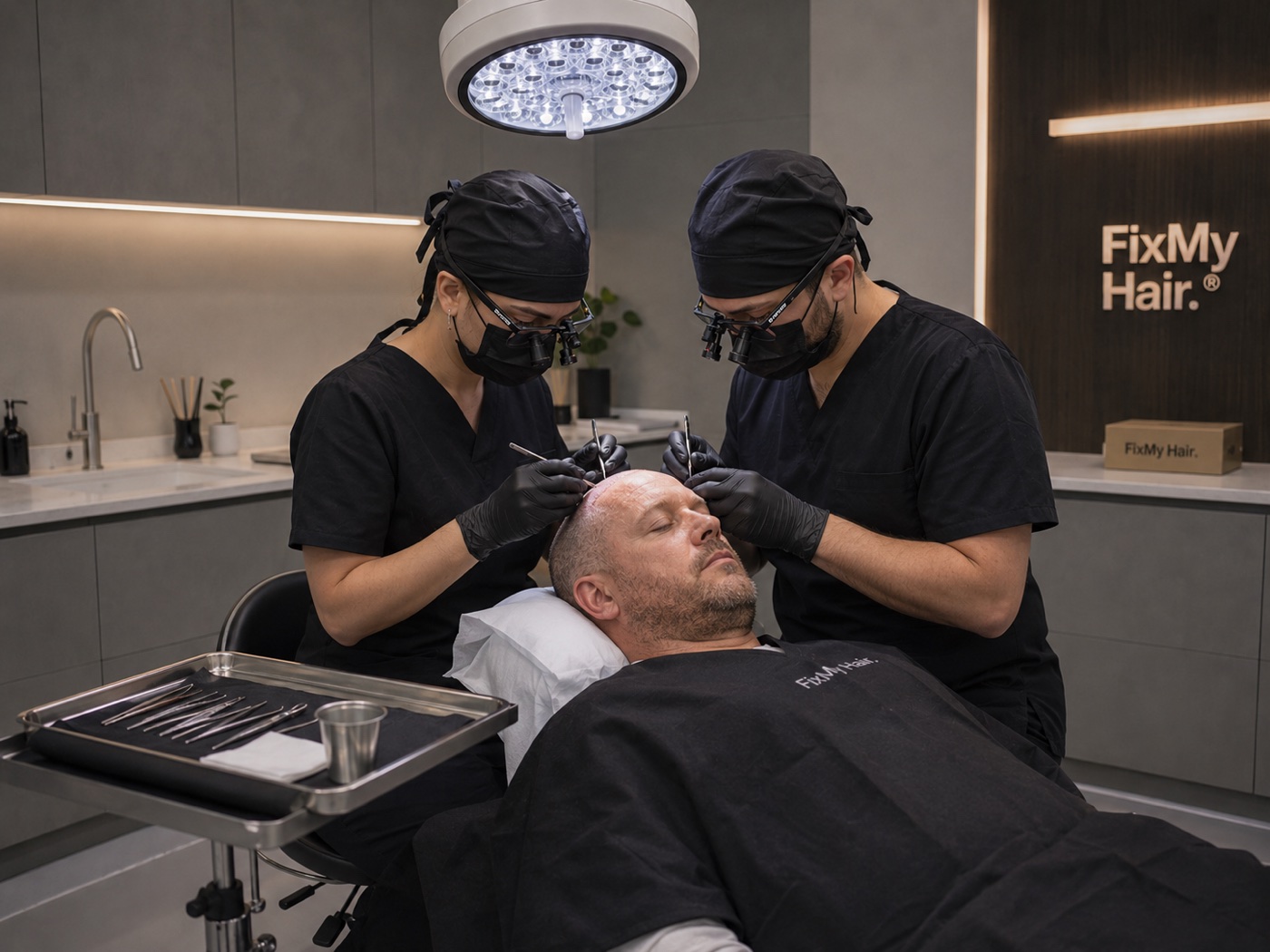
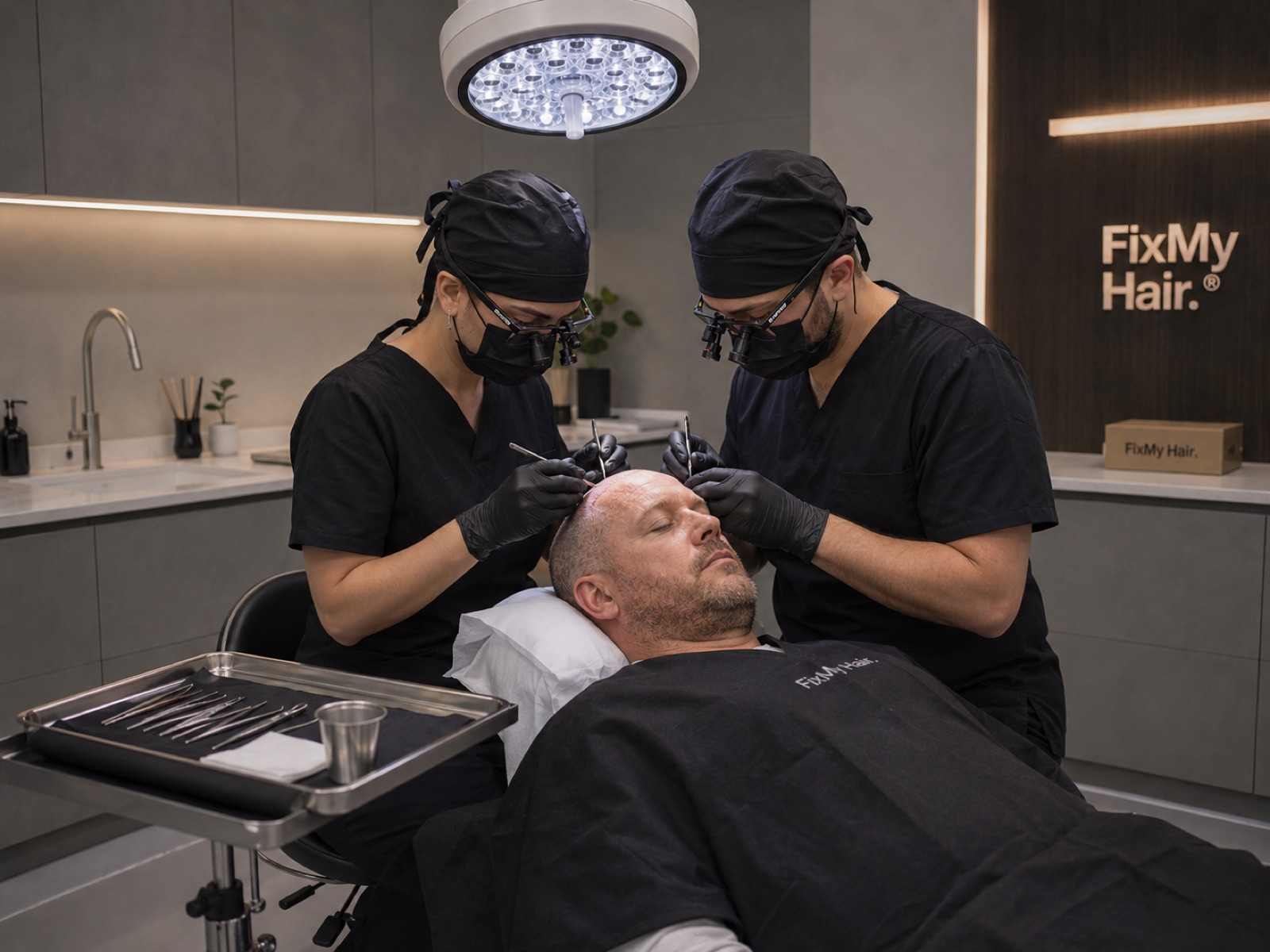
The genuine surgical risks are worth knowing calmly. Infection is uncommon and treatable, and good aftercare makes it rarer still. Folliculitis, small pimple-like spots as new hairs push through, is common and usually settles. Temporary numbness around the donor or recipient area can last a few weeks. Swelling around the forehead is normal in the first days. Shock loss, where some native hair sheds after surgery, is usually temporary but deserves an honest mention beforehand. The serious risks are the permanent ones: a donor area overharvested until it looks moth-eaten, grafts placed at angles that never look natural, and designs that ignore where your loss is heading. Every one of those is a planning and technique failure, not bad luck.
Why we will not quote you a success rate
Plenty of clinics advertise a single glossy percentage. We think that number is marketing, not medicine. A universal success rate hides everything that actually decides your result: whether you were the right candidate in the first place, whether the design respected your future loss, how your donor supply was managed, and how recovery was handled. Quote a number without those and you are being sold to. What we offer instead is an honest assessment of your case, a written plan, and photographic reviews across twelve months so the result is judged in the open.
What actually determines graft survival
Grafts are living tissue, and their survival is decided in hours and millimetres: how long they spend outside the scalp, how they are stored and handled, the precision of the placement, and then how well the first fortnight of aftercare is followed. Patient factors matter too, which is why the medical questionnaire and blood work are not box-ticking. This is also why one patient a day is not a luxury: rushed grafts are wasted grafts.
What a failed transplant really looks like
When people say a transplant failed, dead grafts are rarely the whole story. Far more often the patient was operated on while their loss was still moving, so the result was stranded by recession behind it. Or the donor area was strip-mined for a dense hairline that could never be maintained. Or the angles simply look wrong in daylight. We wrote honestly about fixing other clinics’ work in our repair guide, and about planned follow-on work in what happens if you need a second transplant.
The downsides that are not complications
Some downsides are simply the honest price of a good outcome, and you should walk in knowing them. There is a recovery period to plan around, and a shedding phase a few weeks in that tests everyone’s nerves. The full result takes nine to twelve months, which feels long in the mirror. It costs real money. And your donor supply is finite, so every procedure is a withdrawal from an account that has to last your lifetime. None of this is a reason not to proceed. It is the context an honest clinic gives you before you decide.
How we stack the odds in your favour
Risk management at Fix My Hair is structural, not a slogan. Care is doctor-led from assessment to final review, with the same GMC-registered doctor at every step. We schedule one patient a day so nothing is rushed. Diagnosis comes first, including blood work, because operating on an undiagnosed cause is how avoidable failures happen. And the twelve months of scheduled aftercare are part of the price, because a transplant is judged at month twelve, not at checkout.
When saying no is the safest outcome
The biggest single risk reducer in this field is the willingness to refuse. If your loss is not stable enough, if your expectations cannot be met by your donor supply, or if the medical picture needs attention first, the honest answer is not yet, and we give it. You can read how we decide in am I a good candidate. A clinic that never says no is a clinic transferring its risk onto you.
Common questions
Is a hair transplant safe? In regulated, doctor-led hands, yes: it is a low-risk procedure done under local anaesthetic, and most complications are minor and treatable. The bigger risks are poor planning and poor candidacy, which is why the assessment matters more than the operating day.
What are the downsides of a hair transplant? The honest list: a recovery fortnight you have to plan around, a shedding phase that tests your nerves, a nine to twelve month wait for the full result, real money, and a donor supply that has to be budgeted for life.
What is the success rate of a hair transplant? Any clinic quoting one universal percentage is marketing at you. Success depends on candidate selection, hairline design, donor management and aftercare, so the honest answer is an assessment of your case, not a slogan.
What percentage of grafts survive? In competent hands the great majority take, and survival is decided by how grafts are handled, how they are placed and how closely you follow aftercare. We review your growth photographically across twelve months rather than asking you to trust a number.
How do I know if my transplant is failing? Redness that spreads, increasing pain, or no new growth by month six deserve a review. Most worries turn out to be the normal shedding phase, and our guide to the signs of a healthy recovery shows what normal looks like.
Key takeaways
- Under local anaesthetic in doctor-led hands, FUE is low risk, and most complications are minor and temporary
- The permanent risks are planning failures: overharvested donors, unnatural angles, designs that ignore future loss
- A universal success percentage is marketing: candidacy, design, donor management and aftercare decide your result
- The honest downsides are time, money, the shedding phase and a finite donor supply
- A clinic willing to say no is the biggest risk reducer you can choose