What Is Scalp Micropigmentation (SMP)?
 Written by the Fix My Hair Editorial Team · Clinician-reviewed by Dr Hisham Band · GMC No. 7550130 · Last reviewed 14 Jun 2026
SMP is the most misunderstood treatment we offer, and for the right person, the most transformative. Here’s what it actually is.
What SMP actually is
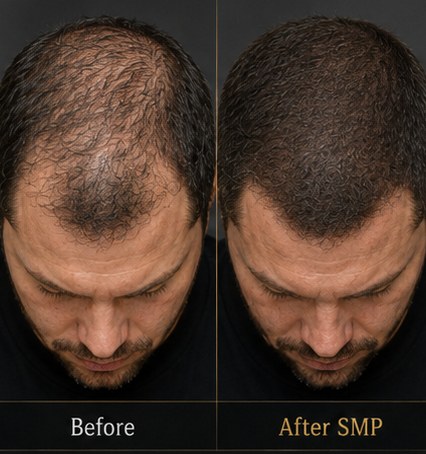
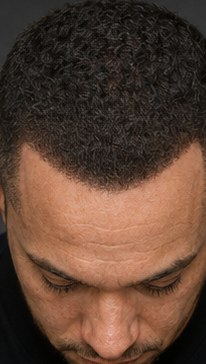
Scalp micropigmentation (SMP) deposits tiny, precise dots of pigment into the upper layers of the scalp to replicate the look of closely-shaved hair follicles. From a normal viewing distance, those thousands of micro-dots read as real stubble, recreating the appearance of a full head of buzzed hair, or adding the illusion of density to thinning areas. It’s sometimes called a “hair tattoo,” but that undersells the precision involved.
How it works
A practitioner uses a fine needle and specialist pigment to place each dot at a controlled depth, matching the size, colour and pattern of your natural follicles. The dots are layered across sessions to build a realistic, varied look, not a solid block of colour. Crucially, SMP doesn’t use standard tattoo ink (which turns blue-green over time); it uses pigments and techniques designed to fade naturally and stay true to tone.
The three things SMP does
- The shaved look, for bald or balding men, SMP recreates the appearance of a full, closely-cropped head of hair. The most transformative use.
- Density, for thinning hair, pigment placed between existing hairs reduces the contrast between hair and scalp, making thin areas look fuller.
- Scar camouflage, SMP can disguise scars from previous surgery (including FUT strip scars) or other causes, blending them into the surrounding look.
What the process involves
SMP is typically done over two or three sessions spaced a couple of weeks apart, letting the pigment settle and the look build up gradually. Each session lasts a few hours, with minimal downtime, some redness for a day or two, and a quick return to normal. Building it across sessions is what produces a natural, layered result rather than a flat one.
How long does it last?
SMP is best described as semi-permanent. The pigment gradually softens and fades over roughly three to five years as the skin renews, after which a top-up refreshes it. That’s actually an advantage: it lets the look be adjusted as you age, for example adding grey to match greying hair, rather than being locked in forever.
Who SMP suits
SMP suits a wide range of people: men who are bald or balding and want a sharp shaved look without surgery; men and women with thinning hair who want more apparent density; those camouflaging a scar; and anyone wanting an immediate, low-maintenance result with no downtime. Because it’s pigment, not hair, it works across all skin tones and hair colours.
What SMP is not
The honest limit: SMP doesn’t grow hair or add length. It creates the appearance of follicles. For the shaved look, that means keeping your real hair clipped short so it blends with the pigment. If you want actual growing hair you can run your fingers through, that’s a hair transplant, and the two are sometimes combined.
Common questions
Does SMP hurt? Most people find it very tolerable, a mild scratching sensation, less than a conventional tattoo, with numbing available.
Will it look fake? Done well, no, see does SMP look natural? The practitioner’s skill is everything.
Is it permanent? Semi-permanent, it fades over 3 to 5 years and is refreshed with a top-up.
Key takeaways
- SMP mimics shaved follicles with pigment
- It doesn’t grow hair, it reduces contrast
- Shaved, density and hairline looks are possible
- Same-day, non-surgical, all skin tones
- Results last years with occasional top-ups